Architectural spaces are defined by lines and curves. The idea of axes and paths was something that we discussed about in the last class. Axis is a formally planned and designed track to walk along. Paths on the contrary are informally created tracks that either diverge from axes or are created to wander in and around a space.


A classic example which I used to understand an axis was that of the “temple”. Temples are supposedly scared places with a well-defined axis, at the end of which lies the statue of the deity. The worshiper enters from the opposite end and the built surroundings of this axis is considered a scared realm. Recently, I visited the Jama Masjid and the ideas of axis and paths were whirling in my head.
The first picture looks like an axis and so does the second. However, the second picture is of the pathway that leads the way out of the mosque. The position of the mihrab is on the left side (of picture).
Thus, the ideas of axis and path are inter dependent and can’t be talked about in isolation. I am yet to understand the clear distinction between the two but the activity we performed in class gave me a little more clarity on the subject.
We were made to choose 5 elements without spending any money on them. Then we were asked to create an axis using the elements. Initially, I made one with the elements not organized according to their dimensions, making it seem like a combination of multiple paths instead of an axis. The use of progression came in handy for this. And, the second exercise was about picking up any emotion and demonstrating it using an axis.
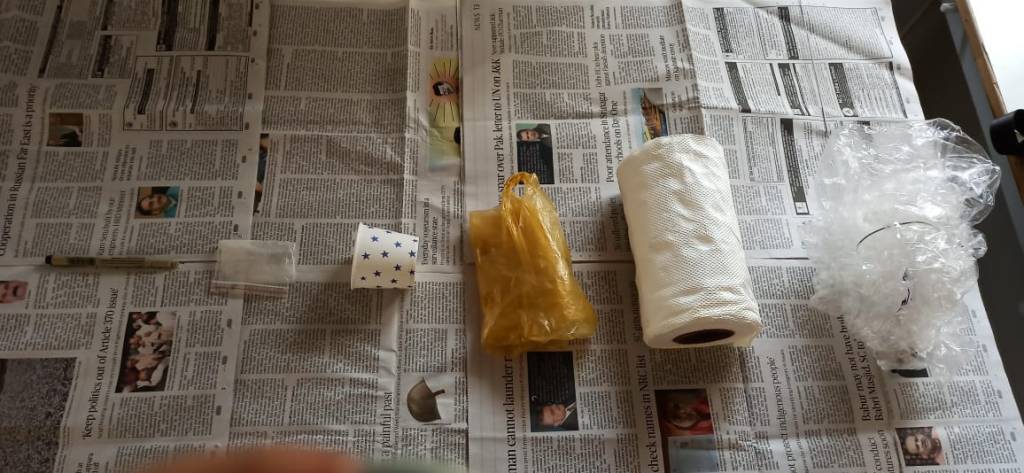

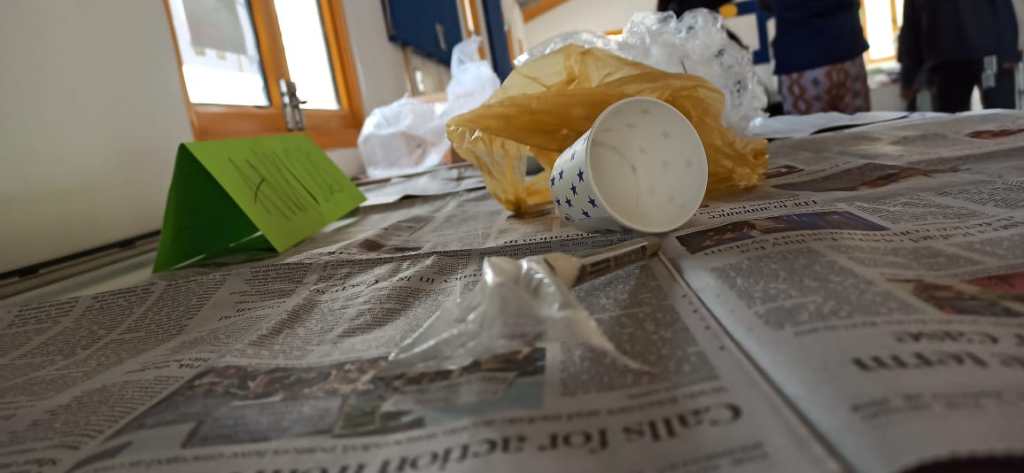
The first emotion that struck me was ‘anxiety’. And to depict it made me even more anxious. I relate the idea of anxiety with confusion, and something that triggers one’s OCD. An axis is conventionally straight, formal and well defined with its end points. However, in my last set up I’ve shown that the pathway seems to have a lock as the objects are placed in obtuse angles.
In conclusion, I’d say that axes and paths co-exist to build an architectural space or in defining a picturesque scenario.
 Varnika's thoughts
It would help us to understand if you had given more visual and textual evidence of your knowledge of what makes an axis work – specifically with the items you arranged. We also are left wondering how you have learned the parameters of movement systems, so that you could do a more effective model given more time? If you can capture the thinking and making processes more accurately, it will make you a stronger designer.
LikeLike
Hey! you could’ve elaborated how you created anxiety in your model. I would suggest you to give more examples to explain axis and path. Otherwise, keep it up! (:
LikeLike