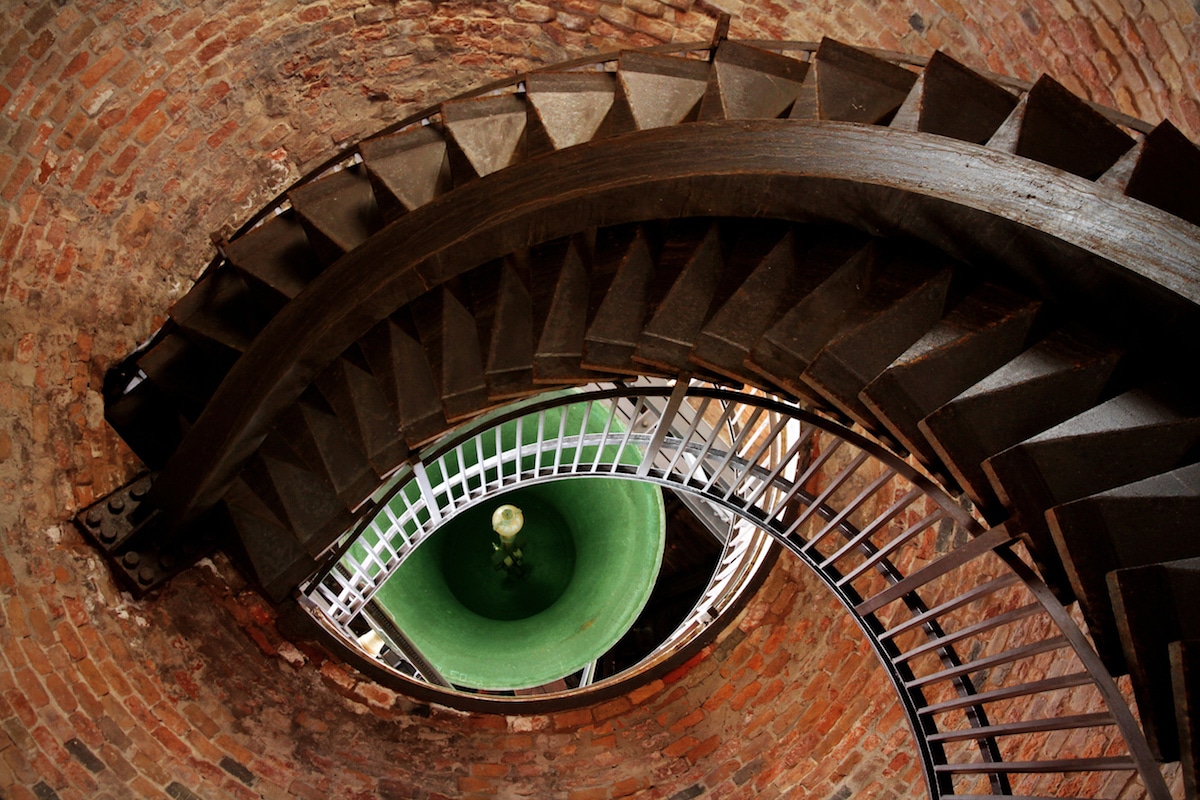

I grew up watching the Chronicles of Narnia and was always awestruck by the magical cupboard which could transport the kids to another world. A world, completely different from ours. To me, that cupboard was a portal. Portal, when thought about in the non-architectural sense reminds me of a tunnel that would take you to another dimension. This is where my conflict with the term began.
In class, we were being taught about portals and openings, like the seven found in human beings’ heads. These openings, in the form of membranes, have different functions. Like the ears for the auditory functioning, eyes for visual and nose for olfactory functioning, etc. But a portal could be another term for an entrance, membrane, porch or door.
Architecturally, a classic example would be of that of the Pantheon with its striking oculus. To me, the largeness of the space is directly proportional to the light coming in and it brightens it up beautifully. The direction of the sunlight and where it’s coming from can help map time onto space, which is exactly the contradiction the definition of a portal would bring up.

Porches are social and functional devices that allows one to see inside and outside of a space. They extend sacred spaces by bringing in different things that come together in an assemblage, without overpowering one another. So it creates visibility as well as invisibility at the same time.
Following this, we made a model of a porch using a scrap piece of cardboard. For this exercise, we were supposed to use scaled measurements and make a miniature figure a.k.a a mini-me, that could access that space through the portal we created.
Initially, I was very confused about the configuration of the mini-me and rolled up a bunch of tissue papers. Those tissues weren’t stable and kept falling. With the help of my professors and some more discussion, I took a small sheet of paper and folded it so that it could stand on itself. It was about 2 cms tall. This mini-me got the name mini-V. Then it was time to make a model.
I struggled to make one, because the idea of a tunnel being a portal didn’t leave my imagination.
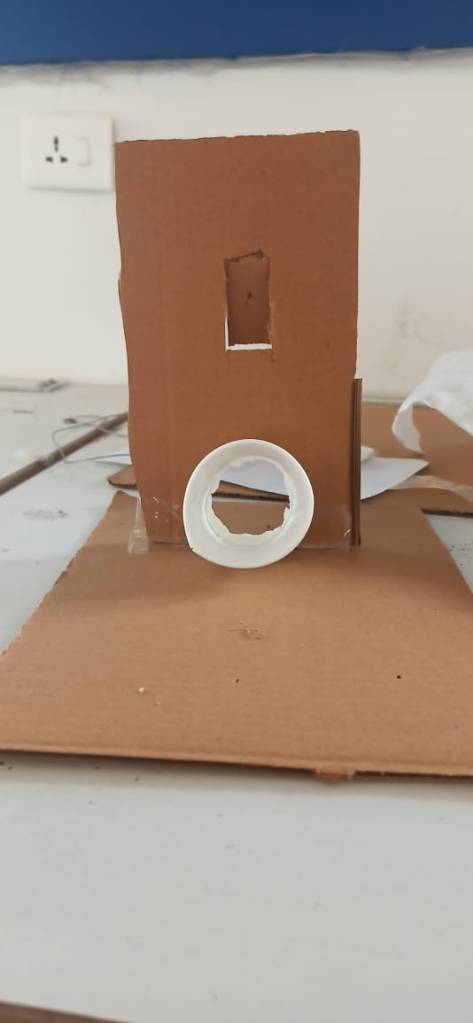
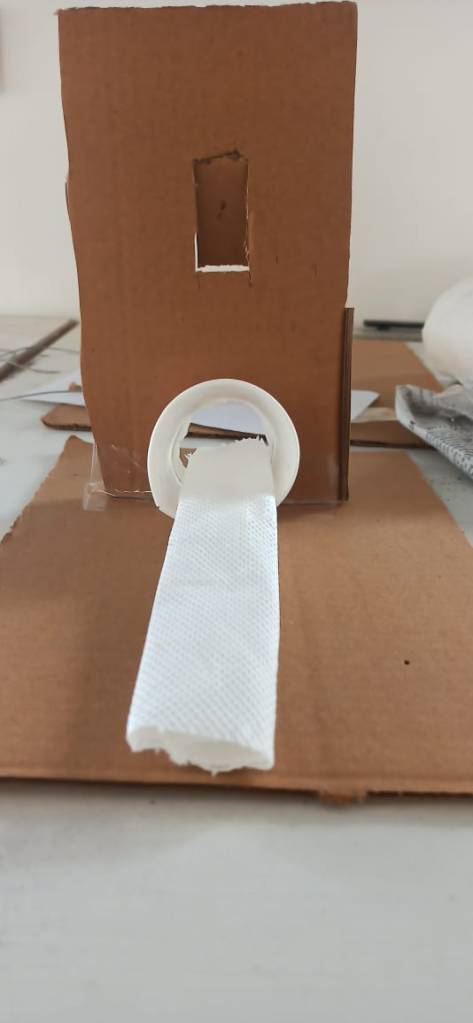
I made a model that would include an axis, platform and a pathway that would lead to some place. It shows that the space is transitory. Therefore, keeping in mind the magic as well as connect portals create, I made an axis that would lead up to a large opening(door/window) that would take mini-V to the other side. This was accompanied by a small window that’d bring about some wonder but remain inaccessible.
The idea of a mini-V was to essentially replicate a human. Thus, humans, bigger or smaller, thinner or fatter, taller or shorter, must be able to pass through it. I wasn’t too cautious of this factor while making the model but would like to keep this in mind later on.
In conclusion I’d like to say that ‘portals’ are an interesting architectural element and are quite accommodating in its meaning (literally) and experience.
 Varnika's thoughts
hi varnika!
what would a portal in an architectural sense mean, if in a non-architectural sesne, it means a tunnel?
also how would you make your body portral more accessible or is it specifically meant for people to venture individually?
love,
akshita
LikeLike