A place transforms into a place when clusters of relationships come together, in unison, to form it. The relationship between the activities performed in that place and the place itself forms a vessel.
Vessels are fascinating architectural elements too. One’s intellectual, emotional and social processes get simulated in the built environment manifested by vessels. Our bedroom would be a classic example of that. It is a vessel where you’re freely allowed to daydream. The chambers in this vessel in the form of windows and doors allow access to the outside world whilst providing enclosure. The transitional spaces that separate these vessels from one another have a role to play as well. They are functional spaces where one masks and de-masks the body.
For the next class of B.E. and its histories, we made vessels based on the emotions that we picked. Anxiety is something that I deal with from time to time. The next model is that of a vessel encompassing anxiety. To do so, I made a mind map of what triggers anxiety, for me, and the steps I take to tackle it.
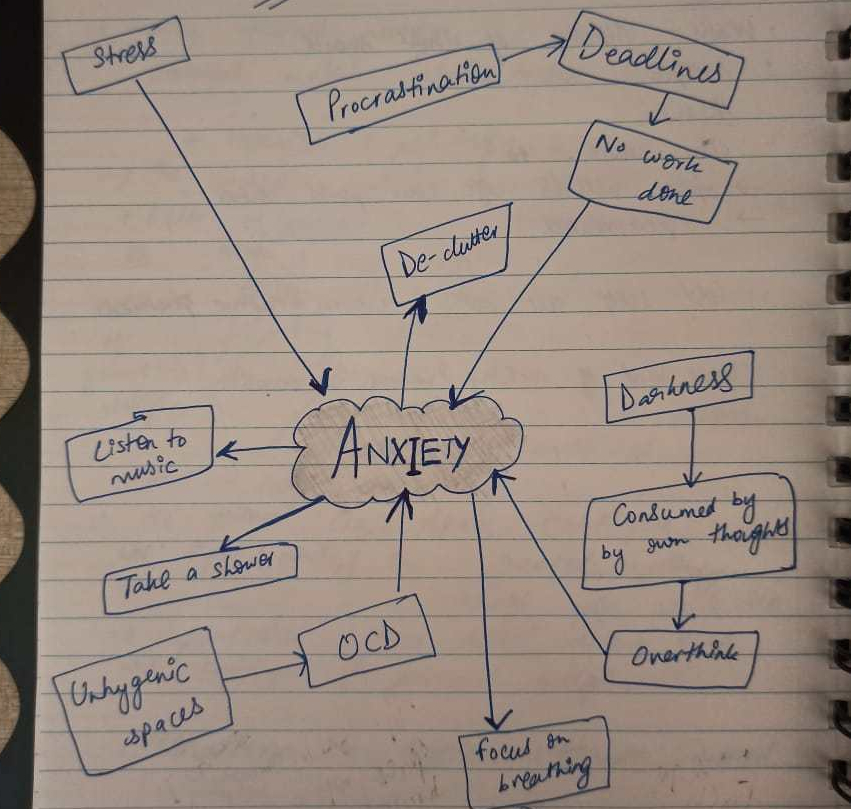
MODEL 1:
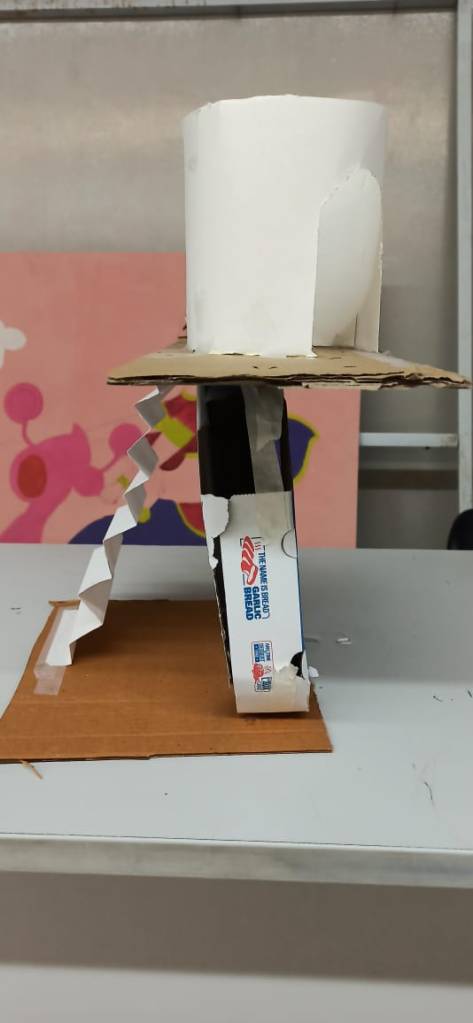
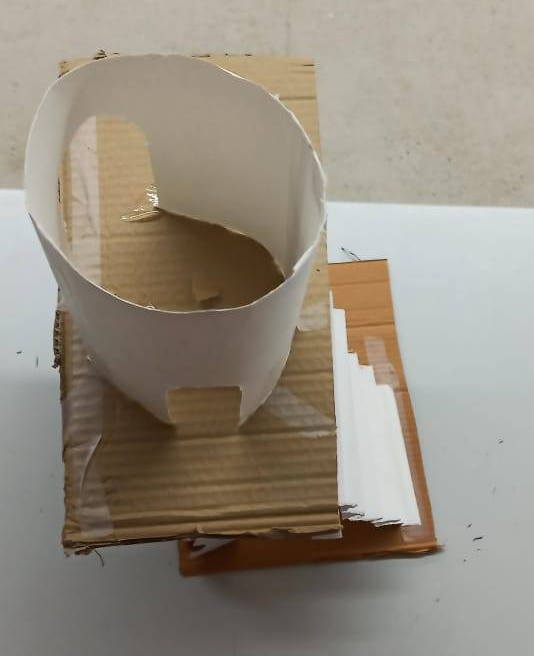
The model I made represents a method to deal with anxiety, purely based on my experience with it. Anxiety is induced by closed confined spaces, where there is minimum light and air. These spaces leave you alone and miserable, consumed by your own thoughts that are overwhelmingly negative. To get past this, I’d imagine a vessel that’s like a shrine. A shrine is a symbolic structure of faith and divinity. It brings peace to me. A long walk or uphill climb diverts your mind from its self-consumed thoughts and focuses on the minute creatures and elements that form the environment around you (built/ not built). This adds up to an image of an uphill shrine in my head. The shrine would have round walls, with no corners. Corners are dark spaces. It’s difficult for light to reach. Large portals for entry and exit enhances the interactions with the outside. It facilitates better movement. The execution of this emotion didn’t turn out as I expected it to be. The stairs leading up to the structure were crooked and strenuous to climb on. The rise and tread are not proportionate and quite big for my mini-V. Thus, I made another model to accomodate these problems.
MODEL 2 (FINAL):

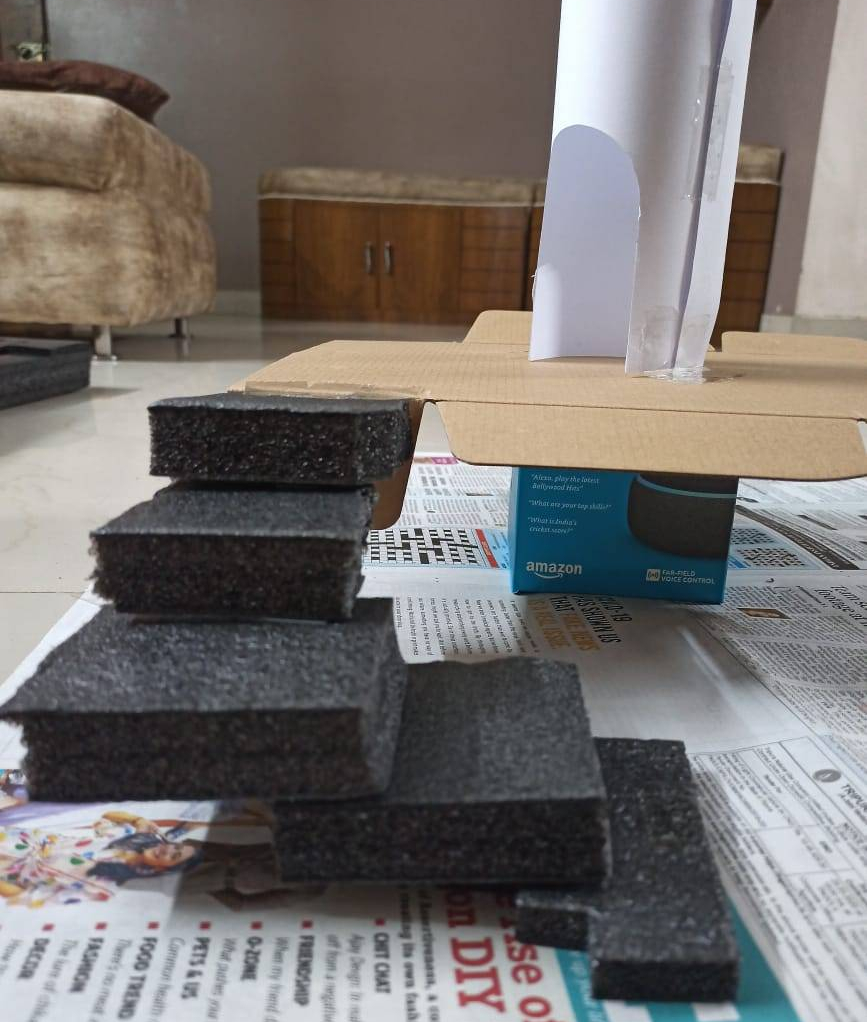

This model has 2 parts to it. The first where anxiety is induced by the brittle ladder that leads up to a chamber which is dark on the inside. This has a single portal and light gets trapped at the center leaving the other areas completely dark. The only way out of this smaller vessel is the ladder. Then, the mini-V would take a longer walk around the model to reach a staircase that leads up to a another vessel. The vessel is covered with a transparent element for ornamentation as well as protection from rain and hail. This vessels exhibits the energy of a shrine. There are no corners to it and thus reduces anxiety. The large portals allow sufficient amounts of air and light to enter. The mini-V could step outside through the portal and experience a beautiful view of the environment surrounding the vessel.
Therefore, I’d conclude by saying that there innumerable vessels that exist and or can be created. The ones inhabiting these have the ability to customize and adapt to them.
 Varnika's thoughts