THE UPHILL BATTLE

A place transforms into a place when clusters of relationships come together, in unison, to form it. The relationship between the activities performed in that place and the place itself forms a vessel.

Vessels are fascinating architectural elements too. One’s intellectual, emotional and social processes get simulated in the built environment manifested by vessels. Our bedroom would be a classic example of that. It is a vessel where you’re freely allowed to daydream. The chambers in this vessel in the form of windows and doors allow access to the outside world whilst providing enclosure. The transitional spaces that separate these vessels from one another have a role to play as well. They are functional spaces where one masks and de-masks the body.

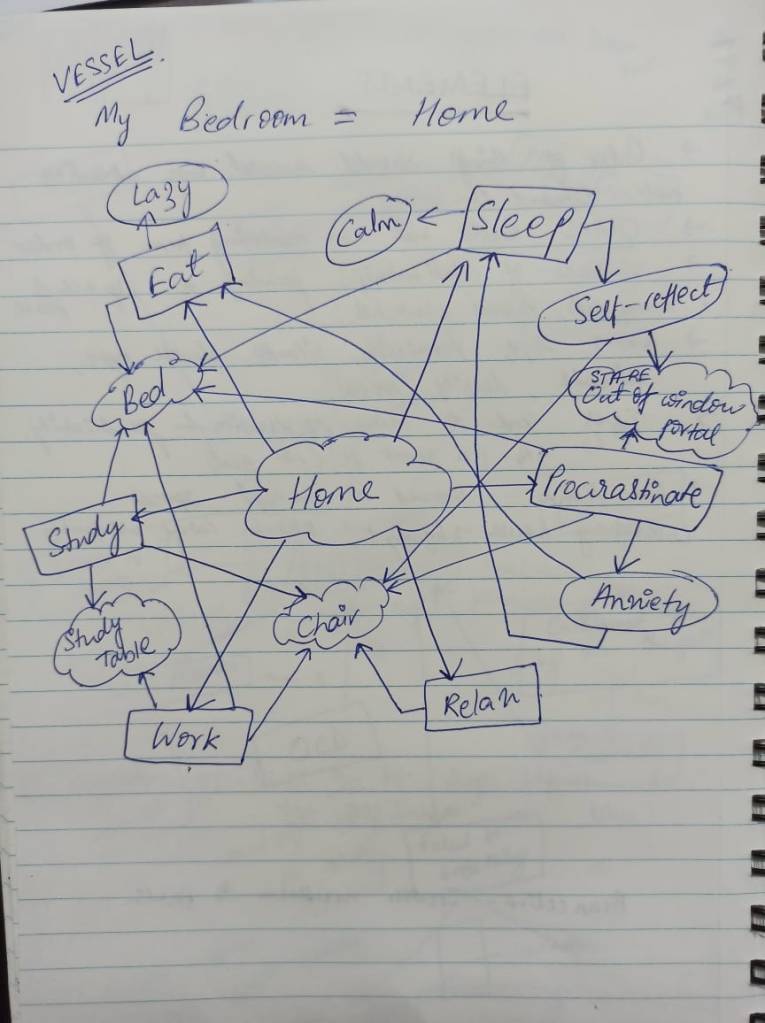
For the next class of B.E. and its histories, we made vessels based on the emotions that we picked. Anxiety is something that I deal with from time to time. The next model is that of a vessel encompassing anxiety. To do so, I made a mind map of what triggers anxiety, for me, and the steps I take to tackle it.
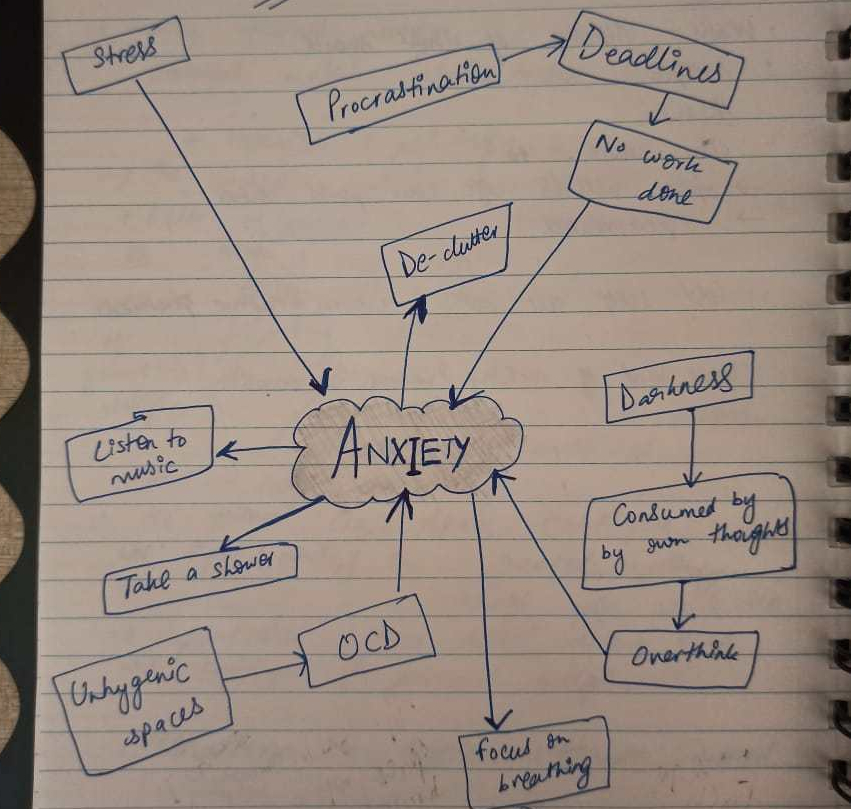
MIND MAP

MODEL 1:

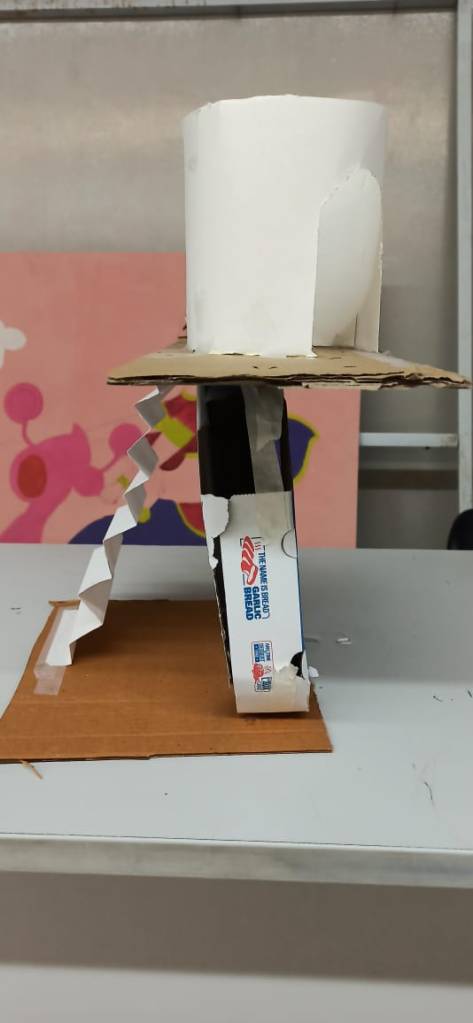
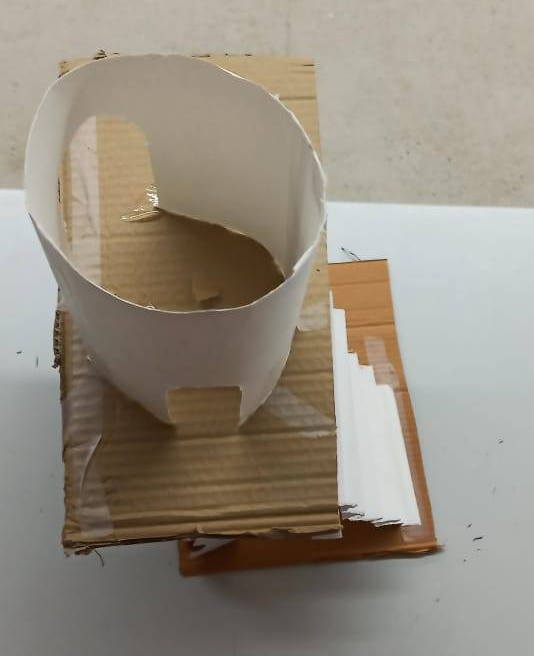
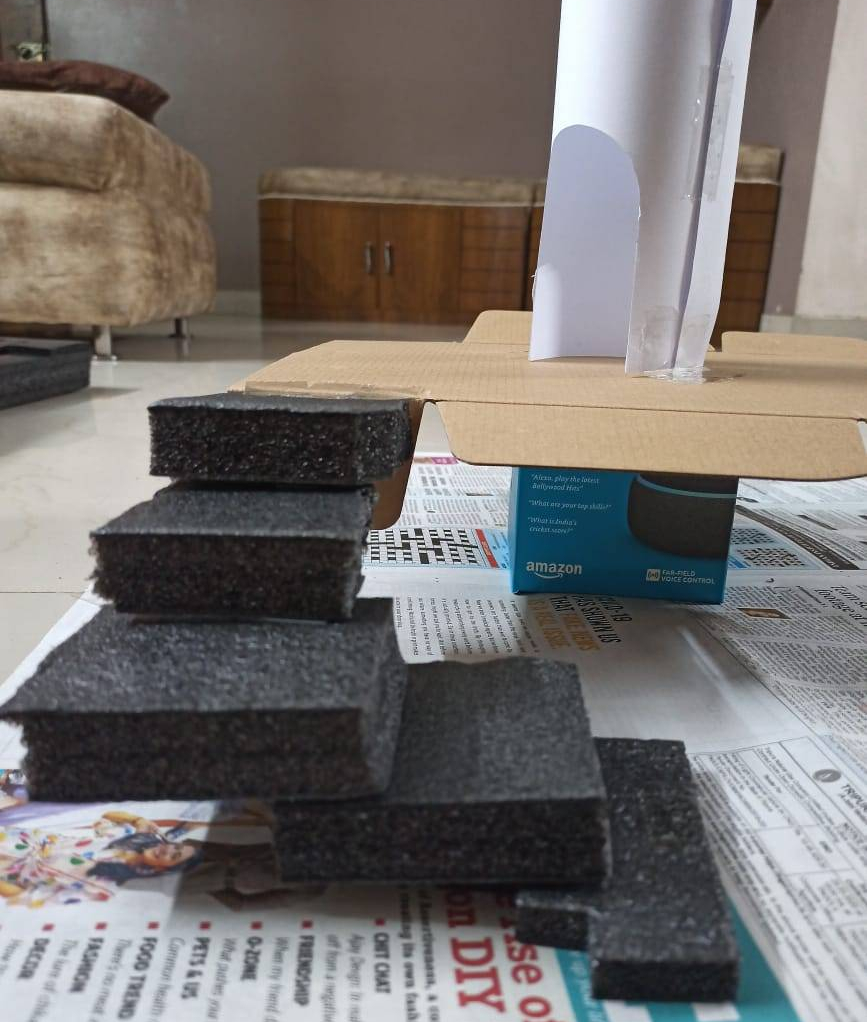
The model I made represents a method to deal with anxiety, purely based on my experience with it. Anxiety is induced by closed confined spaces, where there is minimum light and air. These spaces leave you alone and miserable, consumed by your own thoughts that are overwhelmingly negative. To get past this, I’d imagine a vessel that’s like a shrine. A shrine is a symbolic structure of faith and divinity. It brings peace to me. A long walk or uphill climb diverts your mind from its self-consumed thoughts and focuses on the minute creatures and elements that form the environment around you (built/ not built). This adds up to an image of an uphill shrine in my head. The shrine would have round walls, with no corners. Corners are dark spaces. It’s difficult for light to reach. Large portals for entry and exit enhances the interactions with the outside. It facilitates better movement. The execution of this emotion didn’t turn out as I expected it to be. The stairs leading up to the structure were crooked and strenuous to climb on. The rise and tread are not proportionate and quite big for my mini-V. Thus, I made another model to accomodate these problems.

MODEL 2 (FINAL):

THE VESSEL INDUCING ANXIETY
THE VESSEL RELIEVING ANXIETY

This model has 2 parts to it. The first where anxiety is induced by the brittle ladder that leads up to a chamber which is dark on the inside. This has a single portal and light gets trapped at the center leaving the other areas completely dark. The only way out of this smaller vessel is the ladder. Then, the mini-V would take a longer walk around the model to reach a staircase that leads up to a another vessel. The vessel is covered with a transparent element for ornamentation as well as protection from rain and hail. This vessels exhibits the energy of a shrine. There are no corners to it and thus reduces anxiety. The large portals allow sufficient amounts of air and light to enter. The mini-V could step outside through the portal and experience a beautiful view of the environment surrounding the vessel.

Therefore, I’d conclude by saying that there innumerable vessels that exist and or can be created. The ones inhabiting these have the ability to customize and adapt to them.

HOME WITHIN A HOME

The latest conversation about vessels makes us think about our own homes as one. The spread of coronavirus has lead to many being quarantined or home-bound and this is the time when we can sit and reflect upon the spaces that we inhabit all the time, our homes. 

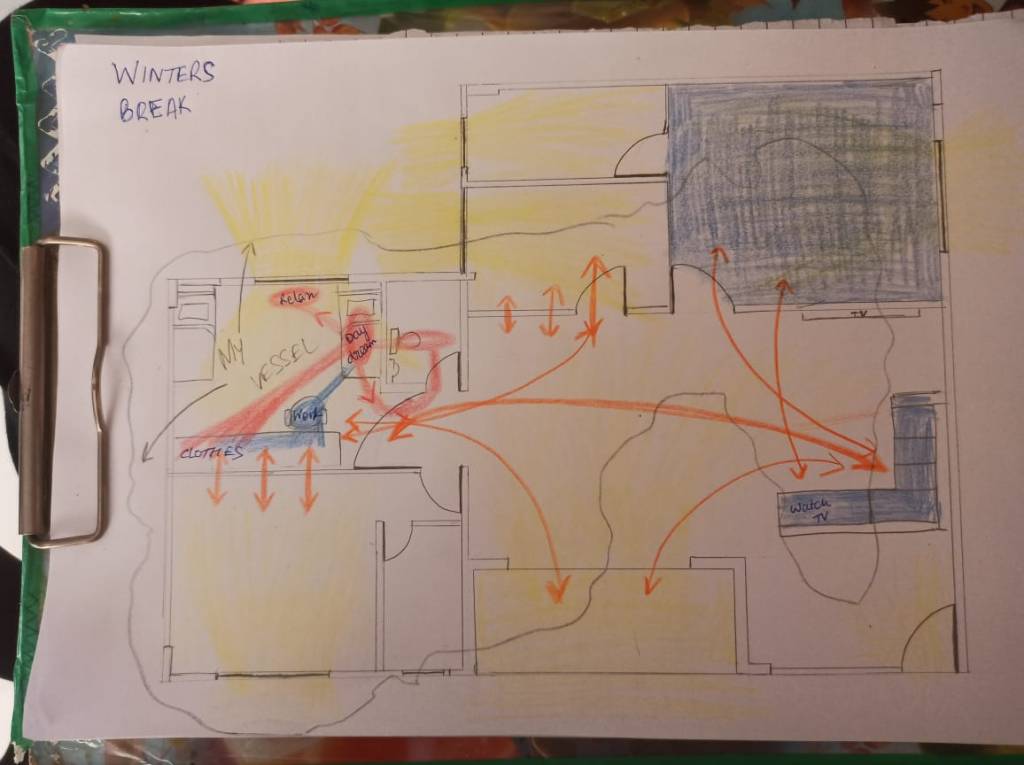
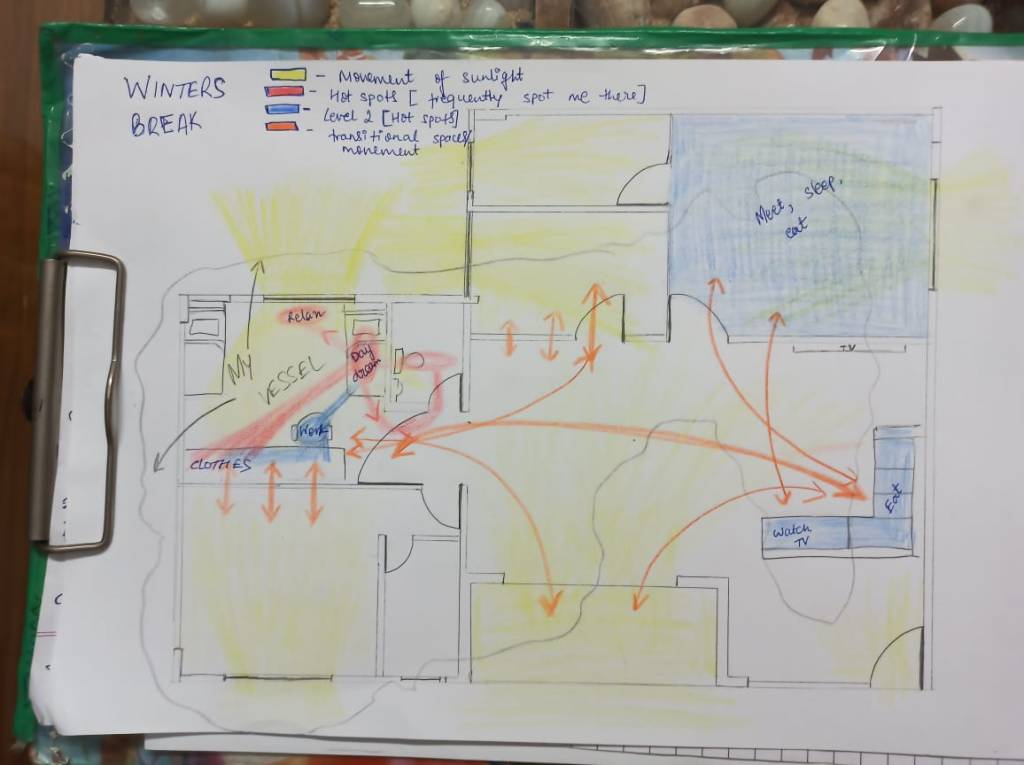
PLAN OF MY HOME

This is a plan for my house. The most colourful and vibrant area is where I spend most of my time, i.e. my bedroom. If we think about it, all our rooms are vessels. For this blog specifically, I’ve chosen to represent my activities and emotions spatially.

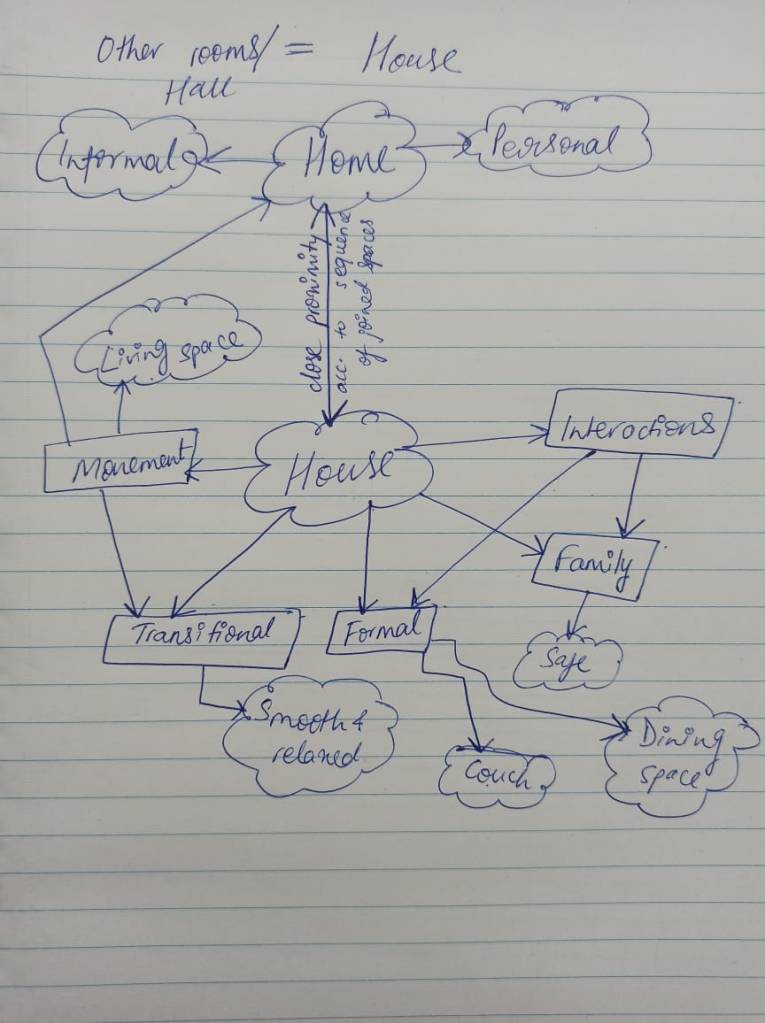
My bedroom is a vessel where I spend most of my time. It is my home, within a home. The mind-map shows the activities and emotions that I link with each space inside of this home.

The window is the visual portal. It enables light and wind to pass through and brightens up the vessel. 

The bed is like a chamber in itself. The door is a connecting portal for people to access my portal. It also acts as a transitional space between several other vessels like the other rooms and living area. The bed is where I spend all my time. It is a private space, covered by the wall(forming a chamber) and a private transitional space connecting it to another bed and the window and study. There is sufficient light and breeze entering this space. The activities and emotions like procrastinating, eating, sleeping, overthinking, and relaxing, all occur at this one site itself. The onset of these activities and emotions leads to my movement from this space, towards the rest of the home. For example, the urge to eat leads me to the living area which is connected to the kitchen. Whenever I’m overwhelmed and anxious, the thing that surprisingly calms me down is to stare at my closet and study board. I do love to pull out my chair at noon, every single day and sit right in front of the visual portal and stare outside at the film studio and trees. The window maintains access to the outside while maintaining enough privacy from my neighbors. It also acts as a great transitional space.

The movement of light highlights the light and shadow areas of the larger vessel. the brighter spaces are therefore more inhabited are interactive than the darker ones. There are multiple visual portals in the vessel. The largest being the balcony that acts as a brilliant portal too. The living area and dining spaces are meant for slightly more formal interactions. Family gatherings, meetings, meals, and movement takes place mainly in this area. Thus, it acts as a great transitional space and place for movement and pacing. Multiple bodies can inhabit this space at once and that makes it accommodating and formal. the contrast between the vessel, home, and the rest of it, i.e. the house is drawn purely based on my interactions and activities in the space. It’d differ for the other members of the family. In fact, this is a seasonal representation. It depicts the movements in the winter season. When the air-conditioners are used in the summers, the movements and interactions with the elements change completely. Due to word and time restrictions, I couldn’t draft that well.

In conclusion, I’d like to say that there personal experiences and interactions with various elements in a house determine how you’d call it your ‘home’.

CHAMBER OF SECRETS

There is a bias against chambers that they are supposed to be enclosed spaces. But is that true?

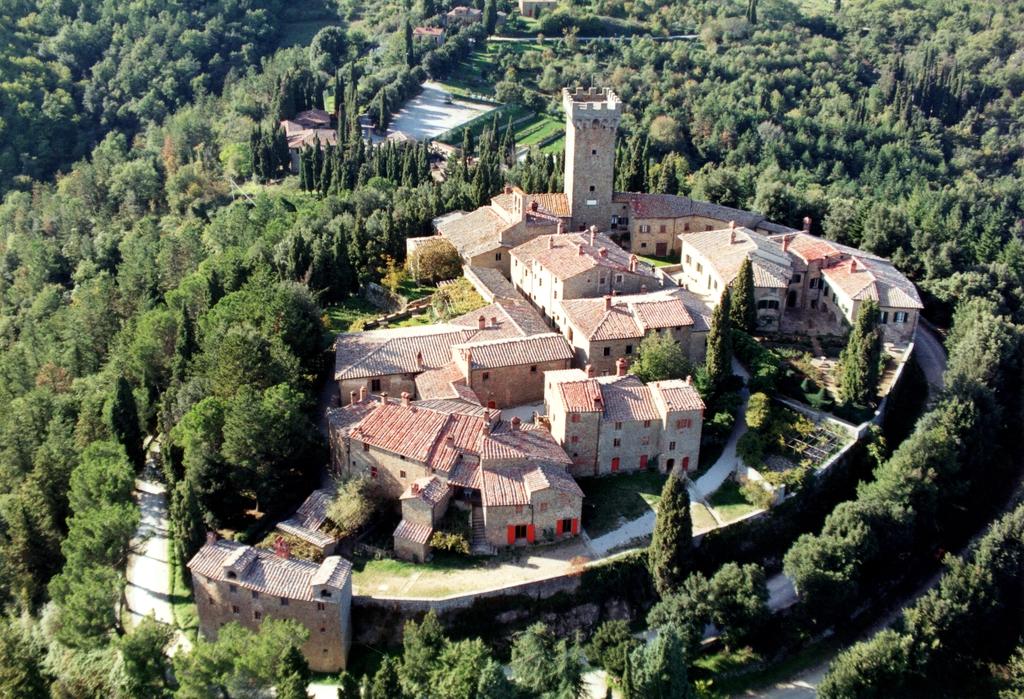
Chambers, in the form of walls, borders, and gated spaces form a distinction between the inside and the outside. They are too confining and rigid. For example, Castello Di Goronzo, in Tuscany seems like a highly enclosed fortress with its boundaries and walls. But, these walls give sanctity to the boundaries. 

Francesco Borromini said that boundaries are folded around the space and are developed in curves and folds. His work on the San Carlo in Sapienza depicts that walls are capable of being flexible and malleable. The skin of the structure becomes a part of the space instead of being just a face. There are 4 fountains(Quatro Fontane) that are built on the exterior of the structure. One of them is built within the wall, almost making it seem like an extension of it, in the form of a porch.  

For making the model of the chambers we used the same idea of expressing the emotions we chose earlier. 

MODEL 1

MODEL 1: PLAN

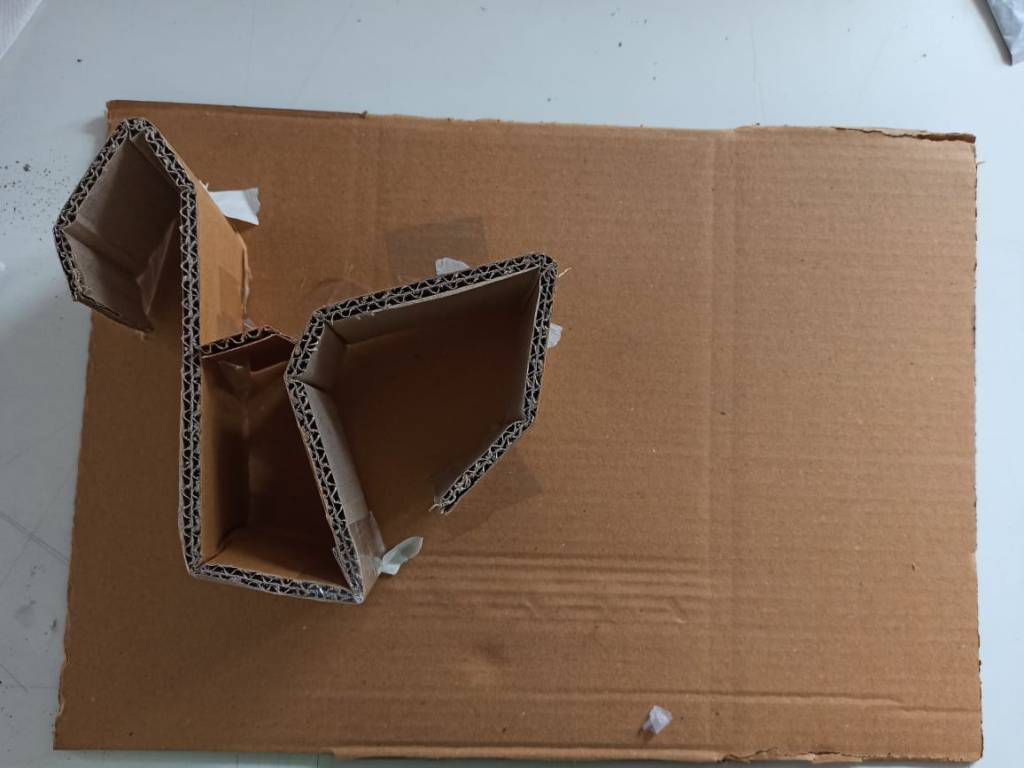
The prop that was provided was cardboard. We cut out a piece of 4×1 and manoeuvred it to make chambers in the form of an architectural “plan” . The visual representation of “anxiety” reminds of places that are dark and secluded. These spaces induce anxiety when I’m left alone in it with my thoughts and nothing else. Overthinking, for me, causes anxiety. To represent it, I folded the board 10 times, forming 3 closed zones where light could not enter easily. These spaces have triangular corners. These rooms that are thus formed are eerily small, enclosed, and dark. The model is being looked at from the top and in the form of a plan with it’s horizontal cross-section making the spaces look like a room. Therefore, anxiety is induced ‘in plan’. However, if one were to look at it from any other angle, say the front side, it wouldn’t make much sense. 

MODEL 2

MODEL 2 : FRONT
MODEL 2 : SIDE VIEW

This time, I made a sectional view of the model where the viewer would look at it from the front. It was slightly more difficult to represent this one. One of my professors told me  – “ when in doubt, exaggerate!”. So I went ahead with that. I exaggerated the meaning of the term ‘anxiety’ and thought of including movement in it. I made a folded place which could be walked in from both sides and had asymmetric corners. There is a small opening at the back which the mini-me would not be able to get through and would induce anxiety. The curves and folds of the frontal section traps light in weird spaces. The mini-me would want to climb up the fold but wouldn’t be able to and that would cause frustration. 

MODEL 3

MODEL 3

 The third model is a combination of a plan and section. So, the viewer could look at it from any side and angle and it should make sense. To do so, I made a base similar to the model of the plan and combined it with the curves of the section to create some dimension in the roof. The shade is asymmetric and looks absurd as there is no defined start and endpoints to it. This triggers one’s OCD. And it also blocks light from entering. Thus, for me it causes anxiety a lot more than the other two models. My mini-V would also be able to access this structure.

TOP VIEW OF ALL 3 MODELS
FRONT VIEW OF ALL 3 MODELS

In conclusion I’d like to say that chambers, in all its forms, are a versatile way to build spaces.

PORTALS TO NOWHERE

I grew up watching the Chronicles of Narnia and was always awestruck by the magical cupboard which could transport the kids to another world. A world, completely different from ours. To me, that cupboard was a portal. Portal, when thought about in the non-architectural sense reminds me of a tunnel that would take you to another dimension. This is where my conflict with the term began.


In class, we were being taught about portals and openings, like the seven found in human beings’ heads. These openings, in the form of membranes, have different functions. Like the ears for the auditory functioning, eyes for visual and nose for olfactory functioning, etc. But a portal could be another term for an entrance, membrane, porch or door.

Architecturally, a classic example would be of that of the Pantheon with its striking oculus. To me, the largeness of the space is directly proportional to the light coming in and it brightens it up beautifully. The direction of the sunlight and where it’s coming from can help map time onto space, which is exactly the contradiction the definition of a portal would bring up.

THE PANTHEON: https://www.viator.com/en-IE/tours/Rome/Skip-the-Line-Colosseum-and-Ancient-Rome-Small-Group-Walking-Tour-Including-Pantheon-and-Piazza-Navona/d511-21468P1

Porches are social and functional devices that allows one to see inside and outside of a space. They extend sacred spaces by bringing in different things that come together in an assemblage, without overpowering one another. So it creates visibility as well as invisibility at the same time.

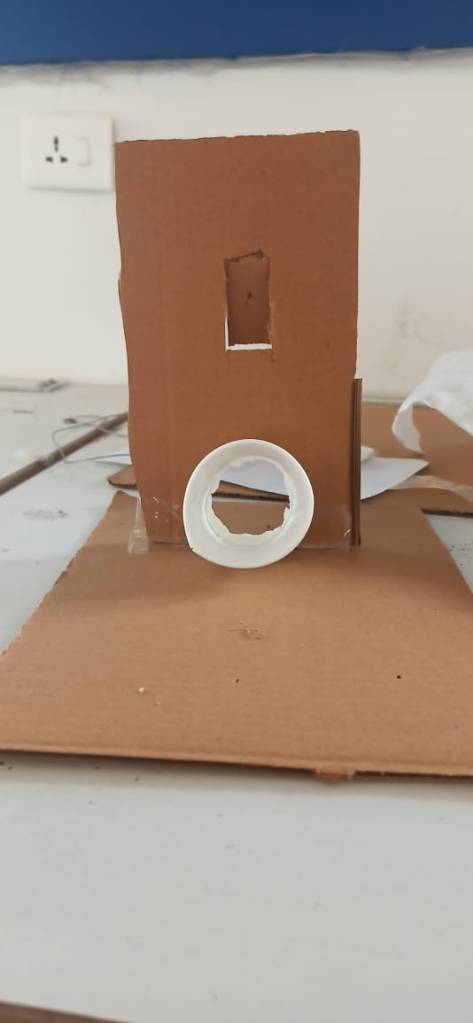
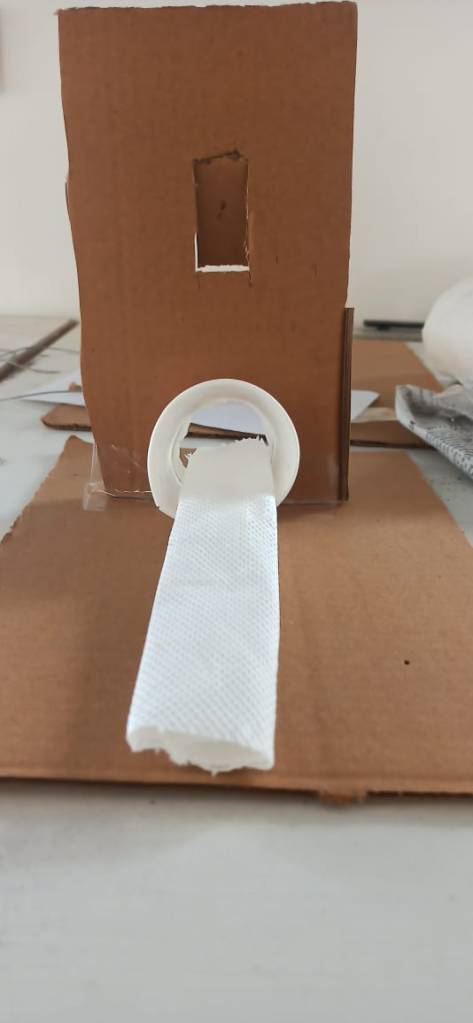
Following this, we made a model of a porch using a scrap piece of cardboard. For this exercise, we were supposed to use scaled measurements and make a miniature figure a.k.a a mini-me, that could access that space through the portal we created.

Initially, I was very confused about the configuration of the mini-me and rolled up a bunch of tissue papers. Those tissues weren’t stable and kept falling. With the help of my professors and some more discussion, I took a small sheet of paper and folded it so that it could stand on itself. It was about 2 cms tall. This mini-me got the name mini-V. Then it was time to make a model.

I struggled to make one, because the idea of a tunnel being a portal didn’t leave my imagination.

MODEL
FINAL MODEL

I made a model that would include an axis, platform and a pathway that would lead to some place. It shows that the space is transitory. Therefore, keeping in mind the magic as well as connect portals create, I made an axis that would lead up to a large opening(door/window) that would take mini-V to the other side. This was accompanied by a small window that’d bring about some wonder but remain inaccessible.

The idea of a mini-V was to essentially replicate a human. Thus, humans, bigger or smaller, thinner or fatter, taller or shorter, must be able to pass through it. I wasn’t too cautious of this factor while making the model but would like to keep this in mind later on.

In conclusion I’d like to say that ‘portals’ are an interesting architectural element and are quite accommodating in its meaning (literally) and experience.

A(n)xi(ou)s

Architectural spaces are defined by lines and curves. The idea of axes and paths was something that we discussed about in the last class. Axis is a formally planned and designed track to walk along. Paths on the contrary are informally created tracks that either diverge from axes or are created to wander in and around a space.

Entrance of Jama Masjid : central axis of the masjid
Jama Masjid

A classic example which I used to understand an axis was that of the “temple”. Temples are supposedly scared places with a well-defined axis, at the end of which lies the statue of the deity. The worshiper enters from the opposite end and the built surroundings of this axis is considered a scared realm. Recently, I visited the Jama Masjid and the ideas of axis and paths were whirling in my head.

The first picture looks like an axis and so does the second. However, the second picture is of the pathway that leads the way out of the mosque. The position of the mihrab is on the left side (of picture).

Thus, the ideas of axis and path are inter dependent and can’t be talked about in isolation. I am yet to understand the clear distinction between the two but the activity we performed in class gave me a little more clarity on the subject.

We were made to choose 5 elements without spending any money on them. Then we were asked to create an axis using the elements. Initially, I made one with the elements not organized according to their dimensions, making it seem like a combination of multiple paths instead of an axis. The use of progression came in handy for this. And, the second exercise was about picking up any emotion and demonstrating it using an axis.

Set up 1
Set up 2

The first emotion that struck me was ‘anxiety’. And to depict it made me even more anxious. I relate the idea of anxiety with confusion, and something that triggers one’s OCD. An axis is conventionally   straight, formal and well defined with its end points. However, in my last set up I’ve shown that the pathway seems to have a lock as the objects are placed in obtuse angles.

In conclusion, I’d say that axes and paths co-exist to build an architectural space or in defining a picturesque scenario.

WORLD ON YOUR BACK

Travelling, as most of the world describes it to be, is a form of rejuvenation and disconnect from the daily life, for most of the world. However, a certain community of people a.k.a ‘nomads’, live their lives as travelers.

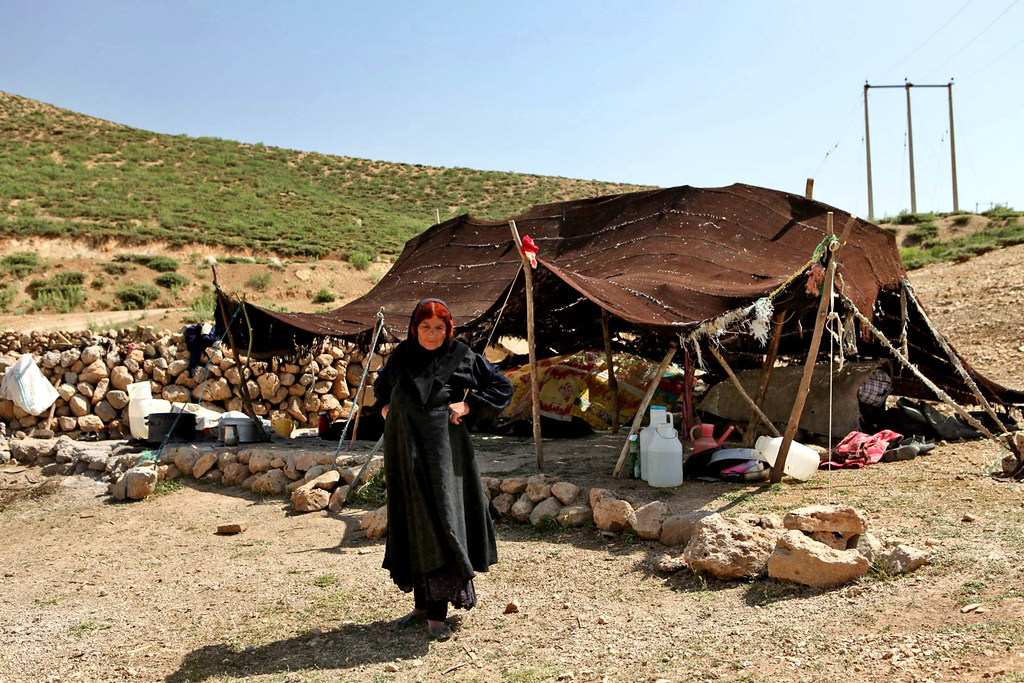
“Take the world with you” is a phrase that perfectly describes the nomadic frame of mind in a romanticized way. They live a life of low impact. The one that is sustainable for the present scenario of Earth, considering climate change, pollution, and several other environmental causes are heightened and global issues now. Living a life of low energy consumption, zero waste, and minimalism in a Western capitalist world that’s driven by materialistic desires is commendable.  However, nomadism isn’t an acquired lifestyle for many. It’s usually passed down by generations. For example, in India, a tribal community called the Changpas are semi-nomadic. They come from Ladakh in Kashmir.

CHANGPA PASTORALISTS

They’re mainly herders who move from one cold region to the other and set up their lives there. The harsh, cold winters of the Himalayas cuts them off from the world. Their only source of the necessity of water is the Indian Army.  Its interesting how they have a cognitive map of the region and can settle in the right place, at the right time. Also, this innate ability of humans to create a sense of comfort for themselves in a completely new and different place is astonishing.

The thing that sets the Changpas apart from the rest is their resource utilization abilities. They create their built environment with materials that are readily available from nature like animal skin, stones, etc. But, haven’t we all come from a time when barter system was prevalent, and this is how life was for our ancestors? The main argument for this being that we’ve all evolved from nomadic roots. So, there is a desire in all of us to go back and relive like the older times. The only difference being that now we have a passport and ornate terminology for people who wander and choose to live a somewhat similar life.

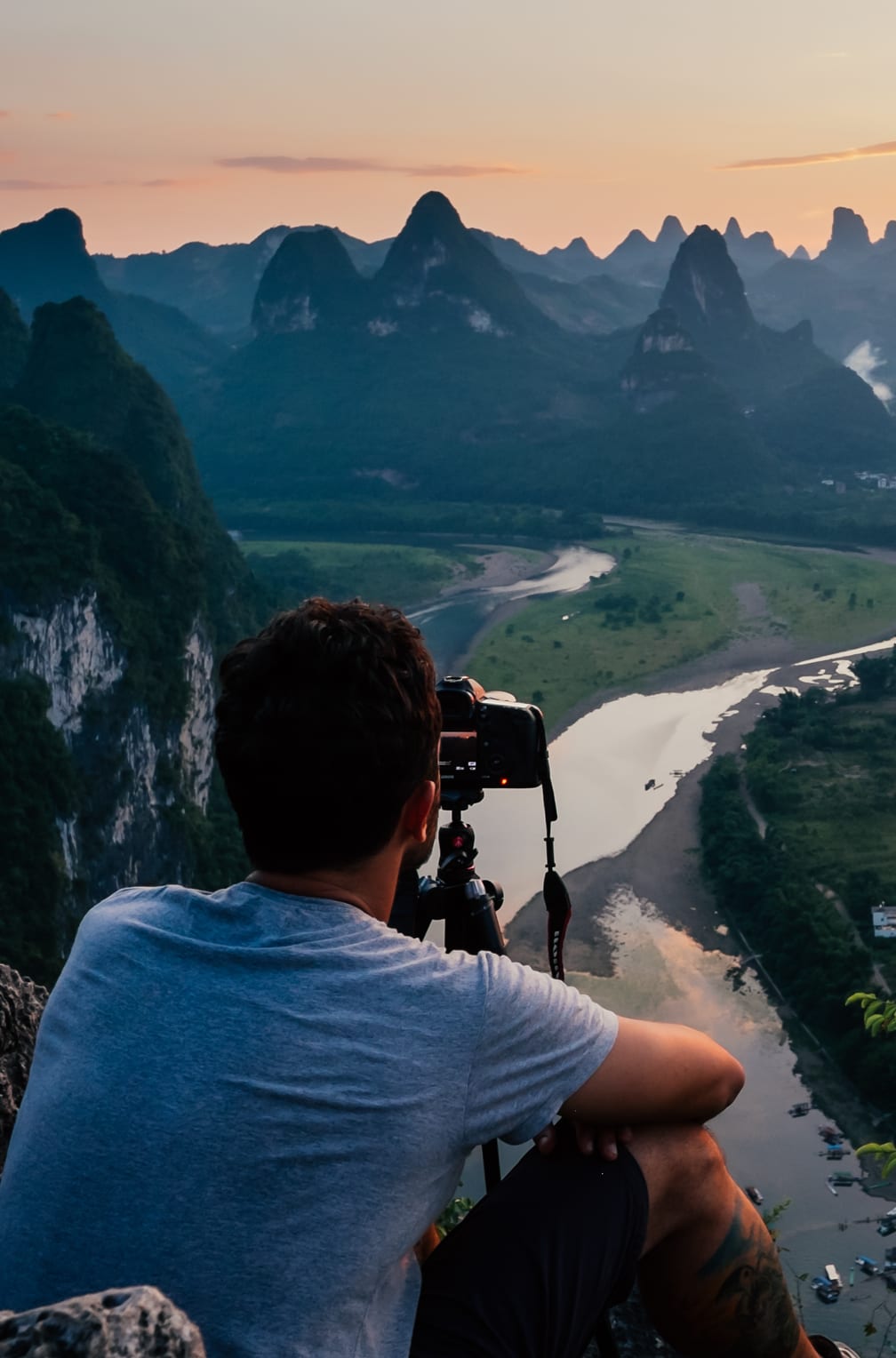
In the modern age, we have the digital nomads. Professional traveler bloggers, publicists, and social media influencers have made a living out of this. There is always an appeal of being the architect of your own life and follow your dreams. However, even though they enjoy the luxuries of travelling across the world and meet new people daily, they’re constantly facing a screen and tiring themselves out. They’re not being as resource efficient as the traditional ones would be either.

Therefore, I’m yet to understand what ‘nomad-ism’ constitutes and who classifies as a nomad?

Design a site like this with WordPress.com
Get started